
What does a dental hygienist do, and how often should you see one?
Hygienist appointments are often treated as an afterthought to seeing the dentist, but they're arguably one of the most important visits for keeping your gums, and your teeth, healthy long-term. Here's what a hygienist actually does, how often you should be seeing one, and a few practical tips along the way.
What does a dental hygienist actually do?
A dental hygienist focuses specifically on the health of your gums and the prevention of gum disease, rather than the broader diagnostic and treatment role of a dentist. Their work centres on removing plaque and tartar build-up, particularly in areas that are hard to reach with regular brushing, and helping you understand how to keep your gums healthy between visits.
What happens at a hygienist appointment with us
- A quick chat about your oral hygiene routine, any sensitivity, and changes since your last visit.
- An assessment of your gum health, checking for bleeding, inflammation, or any signs of pocket depth changes around your teeth.
- Professional cleaning, removing plaque and tartar build-up, particularly around and below the gumline where a toothbrush can’t reach effectively.
- Advice tailored to you: from brushing technique to the right interdental tools for your specific teeth and gaps.
How often should you see a hygienist?
Guidance varies depending on your individual risk of gum disease. Most patients benefit from a hygiene visit every three to six months, but if you have a history of gum disease, smoke, or have gaps and crowns that are harder to clean around, more frequent visits, sometimes every three months, help keep things under control.
Your dentist or hygienist should be able to tell you what interval genuinely suits your mouth, rather than defaulting to a generic schedule.
Signs you’re due a hygienist appointment
- Gums that bleed when you brush or floss
- A rough or gritty feeling on your teeth, particularly near the gumline
- Bad breath that doesn’t improve with brushing
- Gums that look redder or more swollen than usual
- It’s simply been longer than six months since your last visit
Contact us if you think you need a dental hygiene appointment soon.
How regular hygiene visits help prevent gum disease
Plaque that isn’t removed regularly hardens into tartar, which can’t be brushed away and irritates the gums, leading to the early stages of gum disease. Left unmanaged, this can progress to periodontitis: a more serious condition affecting the bone and tissue supporting your teeth.
Regular hygiene visits break this cycle before it starts, which is exactly why hygiene care and periodontal health are so closely linked.
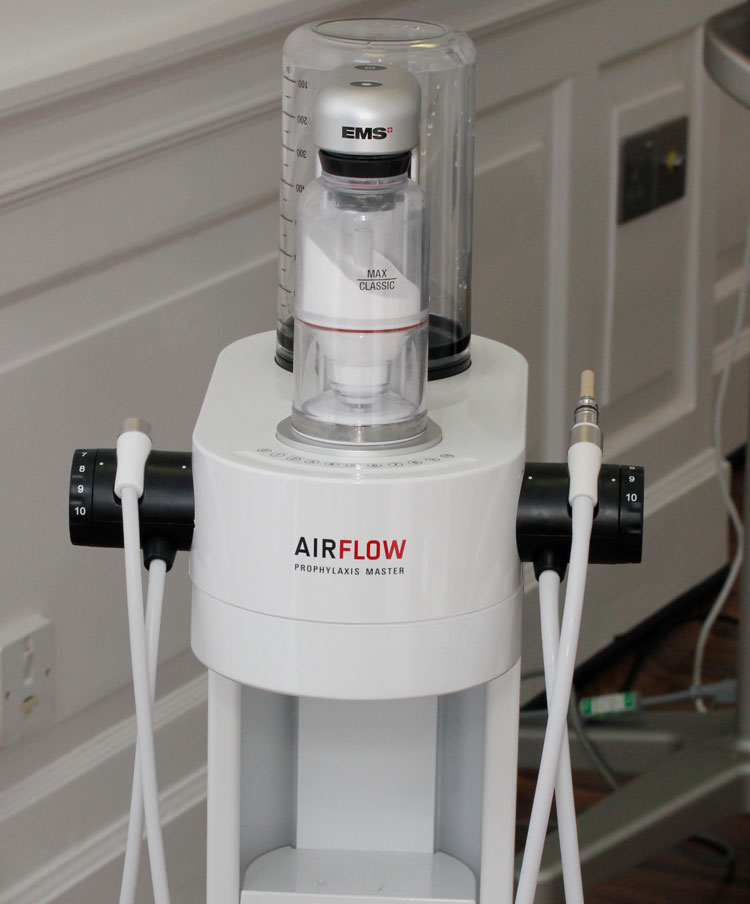
EMS Airflow in Edinburgh for your dental hygiene
If you’ve been searching for a dental hygienist in Edinburgh, it’s worth knowing that hygiene care sits right at the centre of what we do at Edinburgh Gums & Teeth, not as a routine add-on, but as genuine prevention. We were the first clinic in Scotland to introduce EMS Airflow (Guided Biofilm Therapy), a gentle yet highly effective cleaning method that removes plaque, stains and biofilm without the discomfort of traditional scale and polish.
Because gum health is our specialism, our hygiene appointments connect directly with our periodontal care: so if a routine hygiene visit ever flags something that needs closer attention, you’re already in the right practice to have it properly assessed.